

Selling a house as-is in Texas can be a smart option if you want to avoid making repairs, simplify the selling process, or move on a faster timeline. When you sell as-is, you’re offering the property in its current condition and generally do not agree to make repairs before closing, though you still must disclose known conditions.
While selling your home in its current condition may result in a lower sale price, it can also save you the time, expense, and uncertainty that often come with preparing a home for the traditional market. The best approach depends on your goals. Some homeowners have the time and budget to make strategic improvements with the hope of increasing their home’s value before listing, while others find that selling as-is offers the greatest overall benefit after repair costs, holding costs, and other selling expenses are taken into account.
Regardless of which path you choose, it’s important to understand your legal obligations, your selling options, and the financial tradeoffs involved. Below, we’ll explain everything you need to know about selling a house as-is in Texas, including the laws that apply, how the process works, the pros and cons, when making repairs may be worthwhile, and how to decide which selling strategy is right for your situation.
If you decide that selling as-is is the best fit, Texas Home Buyers purchases homes in any condition throughout the state. We provide no-obligation cash offers, allowing you to compare your options and choose the selling approach that best meets your needs.
Key Takeaways
- You must disclose material defects when selling a house as-is in Texas. Selling a home in its current condition is legal, but you’ll generally still need to disclose known conditions and defects required by the Seller’s Disclosure Notice as required by Texas law.
- Selling as-is can simplify the selling process. Instead of coordinating contractors, completing repairs, and preparing your home for showings, you can sell it in its current condition and move on when you’re ready.
- The right selling strategy depends on your situation. Factors such as your home’s condition, repair costs, timeline, local market conditions, and financial goals all play a role in whether selling as-is makes sense.
- You have multiple paths to sell as-is. You can list your home with a real estate agent, sell directly to a cash buyer or investor, or make select improvements before putting it on the market.
- Focus on your net proceeds, not just your sale price. While homes sold as-is may receive lower offers, avoiding repairs, carrying costs, and other selling expenses can sometimes leave you with more money overall.
Should You Sell As-Is or Make Repairs?
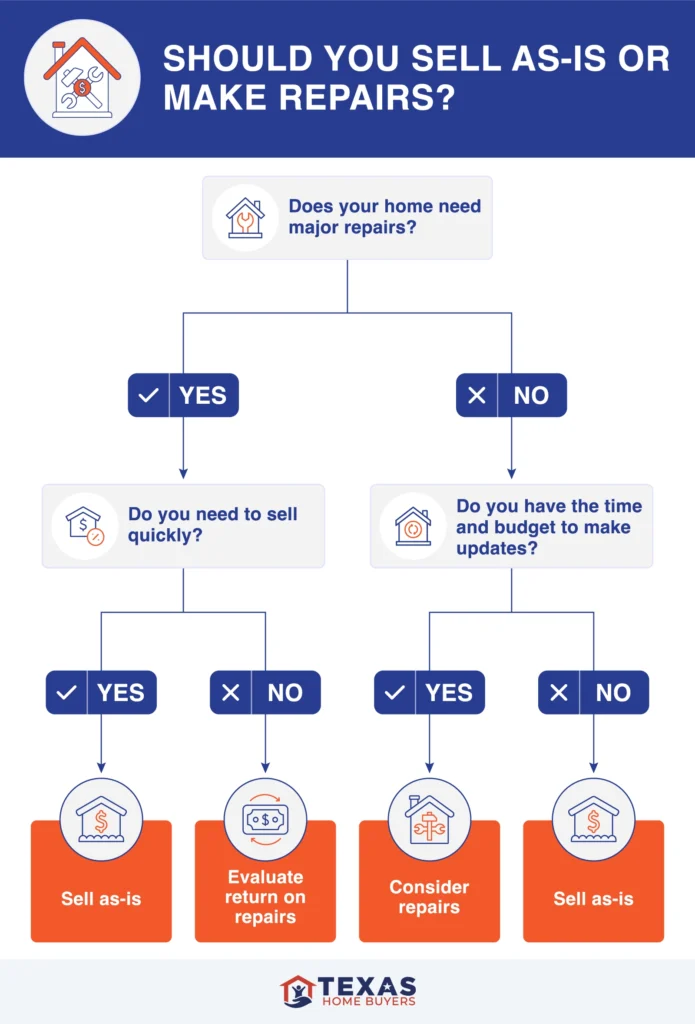
Deciding whether to sell your house as-is or make repairs comes down to one question: Will the time and money you invest before selling improve your overall outcome? For some homeowners, making a few strategic improvements can pay off. For others, selling as-is is the faster, more practical, and more profitable choice.
| Your Situation | Sell As-Is | Make Repairs First |
|---|---|---|
| You need to sell quickly. | ✅ | ❌ |
| You don’t have the budget for repairs. | ✅ | ❌ |
| Your home needs major repairs. | ✅ | ❌ |
| You want the simplest selling process. | ✅ | ❌ |
| Your home only needs minor cosmetic updates. | ❌ | ✅ |
| You have time to invest before selling. | ❌ | ✅ |
| You want to maximize your home’s marketability. | ❌ | ✅ |
| You believe repairs will increase your net proceeds. | ❌ | ✅ |
Making repairs before listing may be worth considering if:
- Your home only needs minor cosmetic updates.
- You have the time and budget to complete the work.
- Comparable homes in your area are updated and move-in ready.
- The improvements are likely to increase your net proceeds more than they’ll cost.
Selling as-is is often the better choice when:
- You need to sell quickly.
- Your home requires major repairs or renovations.
- You don’t want to invest additional money before selling.
- You’re dealing with an inherited home, divorce, relocation, or financial hardship.
- The cost of repairs outweighs the potential increase in sale price.
How to Sell a House As-Is in Texas
After you decide that selling as-is may be the right fit, the next step is understanding how the process works. Selling a house in its current condition is legal in Texas, but you still need to handle disclosures, choose the right selling method, prepare for inspections and negotiations, and compare offers carefully before closing.
Step 1: Understand Your Disclosure Requirements
Selling a house as-is does not eliminate your responsibility to disclose known issues with the property.
Under Texas Property Code § 5.008, most sellers are required to provide buyers with a Seller’s Disclosure Notice, which outlines known material defects and other important details about the property’s condition, including:
- Foundation issues or previous foundation repairs
- Roof leaks or past roof damage
- Water damage or flooding
- Plumbing, electrical, HVAC, or septic system problems
- Termite damage or previous termite treatment
- Structural defects or previous structural repairs
- Known environmental hazards
- Repairs completed following insurance claims
- Any other known conditions that could materially affect the property’s value or desirability
This disclosure requirement generally applies whether you list your home as-is with a real estate agent, sell on the open market, or sell directly to a cash buyer. While an as-is sale may limit your obligation to make repairs before closing, it does not allow you to hide known problems or skip required disclosures. If you’re unsure whether a condition should be disclosed, it’s generally safer to disclose what you know than to omit information that could later become a point of dispute.
Texas Property Code § 5.008(e) identifies certain transfers that may be exempt from the Seller’s Disclosure Notice requirement, including some transfers involving estates, foreclosures, court orders, co-owners, and newly constructed homes. Because these exemptions depend on the specific circumstances of the sale, consider speaking with a qualified real estate attorney or real estate professional if you are unsure whether they apply.
Step 2: Choose the Best Selling Method
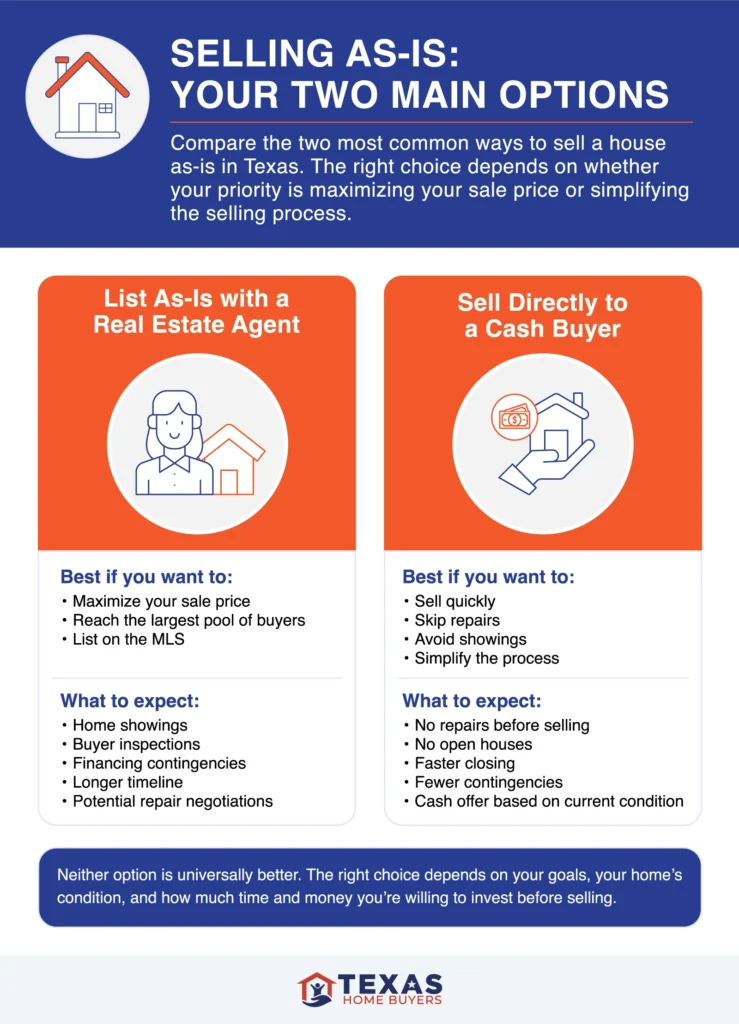
After you understand your disclosure obligations, the next step is deciding how you want to sell your home. The best option depends on your priorities. Some homeowners are focused on maximizing their sale price, while others value speed, convenience, or avoiding repairs.
| Selling Method | Best for | Timeline | Potential Sale Price | Upfront Effort |
|---|---|---|---|---|
| Sell directly to a cash buyer | Sellers who prioritize speed, convenience, and avoiding repairs | 15–30 days | Moderate | Low |
| List your home as-is with a real estate agent | Sellers who want maximum market exposure and the highest potential sale price | 30–90+ days | Highest potential | High |
Sell Directly to a Cash Buyer
Best for: Homeowners who want to sell quickly, avoid repairs, or simplify the selling process
Cash buyers purchase homes in their current condition, allowing you to skip repairs, showings, and many of the delays associated with traditional financing. These buyers may include professional home-buying companies, local investors, or individuals purchasing investment properties.
While cash offers may be lower than what a fully renovated home could sell for on the open market, many homeowners value the speed, convenience, and certainty of a direct sale.
List Your Home As-Is with a Real Estate Agent
Best for: Homes in generally good condition where maximizing sale price is the top priority
Listing your home as-is with a real estate agent allows you to market it on the MLS without making repairs beforehand. This option gives your home the broadest exposure to buyers and may help maximize your sale price, though buyers may still request inspections, negotiate repairs or credits, or adjust their offer based on the home’s condition.
Step 3: Compare Offers Based on Overall Value
Many homeowners wonder how much they lose by selling a house as-is. The answer depends on how you measure it. While an as-is home may sell for less than a fully updated property, it can also save you significant time and money by eliminating repair costs, reducing holding costs, and allowing you to close sooner. That’s why it’s important to compare your overall profit — not just your final sale price.
The difference between an as-is sale and a traditional sale depends on factors such as your home’s condition, the cost of needed repairs, local market conditions, and the type of buyer you’re selling to. For example, a home that only needs fresh paint and minor cosmetic updates may sell for close to market value. On the other hand, a property with significant foundation issues, water damage, or major deferred maintenance will typically receive lower offers because buyers must account for the cost and risk of completing those repairs.

Whether you’re comparing offers from a cash buyer or evaluating an offer after listing your home on the open market, buyers typically consider:
- Your home’s current condition and estimated repair costs
- Comparable sales of similar homes in the area
- The property’s location and local market demand
- The time and cost required to complete renovations
- Expected holding costs, such as property taxes, insurance, utilities, and financing
- The level of risk associated with the purchase
Because every property is different, it’s often a good idea to compare multiple offers, not just based on purchase price, but also on closing costs, timeline, contingencies, and your expected net proceeds. In many cases, the best offer isn’t the highest one — it’s the one that leaves you in the strongest overall financial position.
Step 4: Prepare for the Inspection and Negotiation Process
The final step is preparing for the buyer’s due diligence. Even when selling a house as-is, buyers will typically evaluate the property’s condition before moving forward with the purchase.
Here’s what you can expect:
- A buyer may still schedule a home inspection. In many Texas home sales, buyers negotiate an option period that gives them time to inspect the property and decide whether to move forward with the purchase. During this period, buyers may hire inspectors or contractors to evaluate the home and, depending on the terms of the contract, may have the right to terminate the agreement before the option period expires.
- Negotiations may still happen after the inspection. Although you’re selling the home as-is, buyers may request a lower purchase price or a credit based on the inspection findings. They can also ask you to make repairs, but you’re generally under no obligation to agree unless your purchase contract says otherwise. You can accept, reject, or negotiate any requests.
- Financing may affect the transaction. Homes with significant foundation issues, water damage, or other major defects may not qualify for certain mortgage programs. As a result, buyers using traditional financing may be more limited than cash buyers. Even if a buyer qualifies for financing, an appraisal may identify condition issues that affect value or loan approval.
- The sale moves through closing. Once you’ve accepted an offer and completed any negotiations, the transaction typically proceeds through escrow, title work, and closing like any other real estate sale.
A Simpler Way to Sell Your House As-Is in Texas
If you’ve decided that selling your house as-is is the right choice, Texas Home Buyers offers a straightforward alternative to the traditional market. We purchase homes in any condition throughout Texas, allowing homeowners to sell without making repairs, completing renovations, or preparing their property for showings.
Whether you’re dealing with an inherited property, foundation issues, water damage, an outdated home, or simply want to avoid the time and expense of listing on the open market, our team can provide a fair, no-obligation cash offer based on your home’s current condition.
When you work with Texas Home Buyers, you can expect:
- No repairs or renovations before selling
- No real estate commissions or hidden fees
- No open houses or repeated showings
- Flexible closing timelines that work with your schedule
- A transparent, no-obligation cash offer
- A local team that can guide you through the process from start to finish
We understand that every homeowner’s situation is different. That’s why we encourage you to compare your options, ask questions, and choose the selling approach that best fits your goals. If you’d like to see what an as-is cash offer looks like, we’re happy to provide one with no pressure and no obligation to move forward.